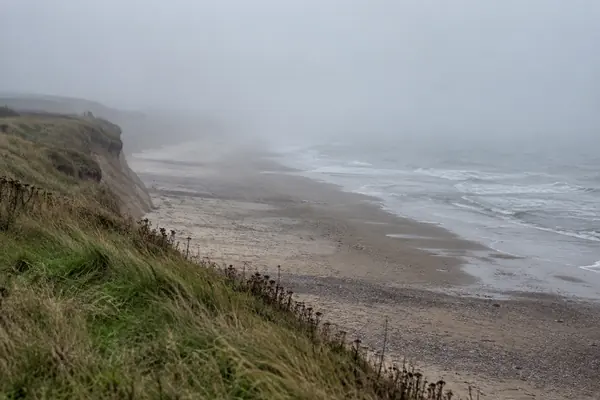
CLEAR DAYS
More than 40 km
In Met Office forecasts, visibility over 40,000 metres is rated excellent, and 20 to 40 km very good.
Check a rating doodleview
00WHAT THE FORECAST MEANS

Some days you can see for miles. Others, barely across the road.
Forecasters measure that as visibility: the distance at which an object can be clearly seen. Here is how the Met Office grades it, and what mist, fog and haze are doing to the view.
Check a visibility rating01Principles
02THE SHORT ANSWER
Water droplets make mist and fog.
Dry particles make haze.
CLEAR DAYS
In Met Office forecasts, visibility over 40,000 metres is rated excellent, and 20 to 40 km very good.
Check a ratingFOG
Fog cuts visibility to less than 1,000 metres. Valley fog forms when cold, dense air settles into low ground and can last for days in calm winter weather.
See the numbersCOASTAL FOG
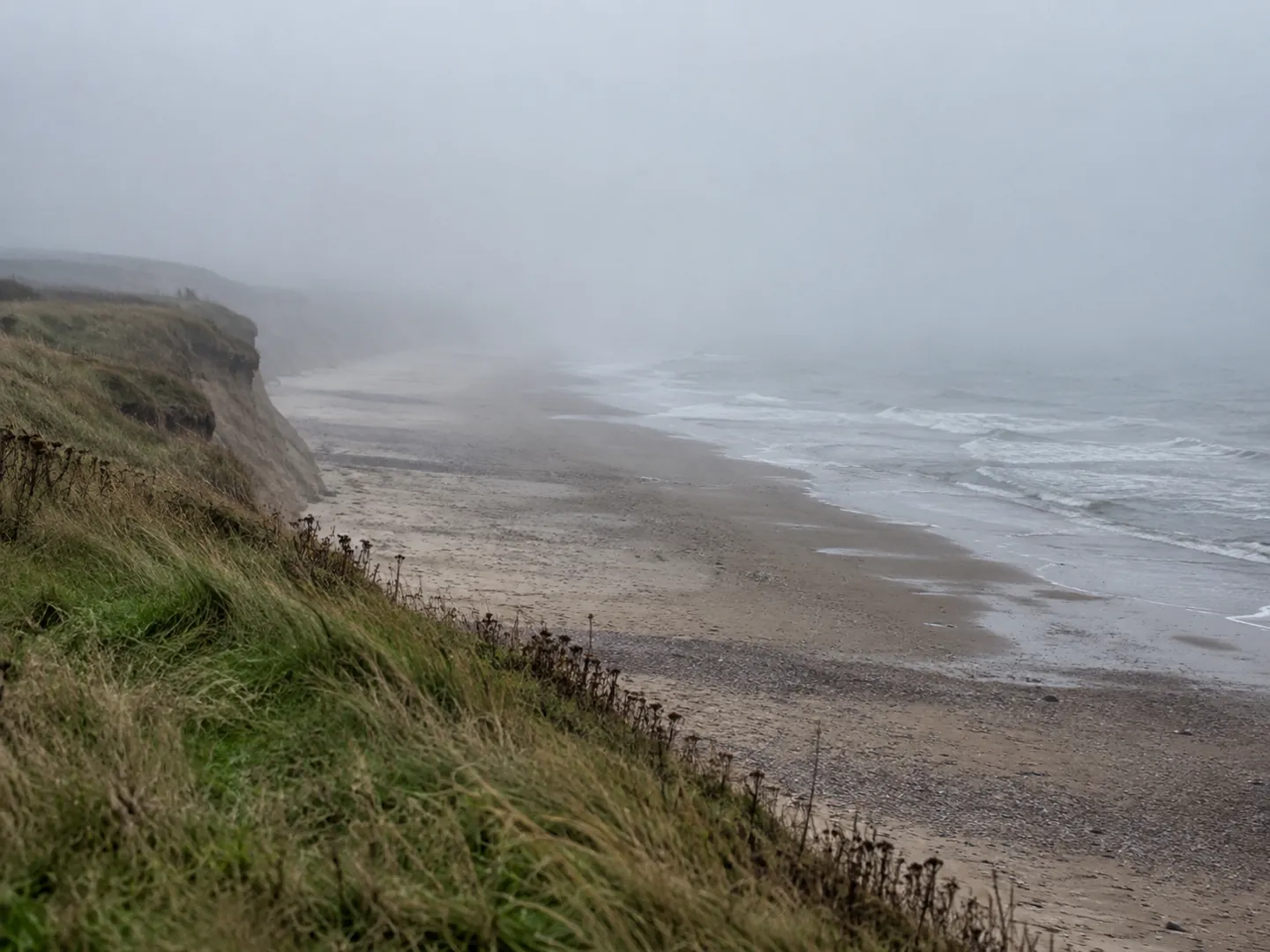
Coastal fog is frequent along the UK's east coast in spring and summer, when warm, moist air moves over the cool North Sea.
Mist, fog or haze?03A QUICK VISIBILITY CHECK
Pick a visibility rating from a Met Office forecast to see how far you should be able to see. The bar shows how far the view goes.
Visibility measures the distance at which an object can be clearly seen. Above 40,000 metres is rated Excellent.
04TWO NUMBERS WORTH KNOWING
One line between mist and fog,
one for the fog that stops traffic.
1,000 m
The visibility that separates fog from mist
If you can see less than 1,000 metres it is fog; if you can see further it is mist. Public forecasts generally use fog for visibility under 180 metres.
FOG OR MIST · MET OFFICE
< 100 m
Visibility in dense fog
Dense fog, under 100 metres, can cause severe travel disruption. The thickest fogs tend to form in industrial areas, where pollution particles help droplets grow.
DENSE FOG · MET OFFICE
At sea the scale is different: Met Office marine forecasts call visibility good when it is more than 5 nautical miles, and very poor when it is under 1,000 metres.
05FOUR THINGS TO WATCH FOR
Whether you are planning a hill walk or a drive, these patterns help you guess how far you will see.
These favour radiation fog, as the ground cools overnight. It usually clears soon after sunrise as the ground warms.
Cold air settling in valleys makes valley fog, which can last for several days in calm winter weather.
Air cools as it is pushed up a slope, forming upslope or hill fog on higher ground.
On the east coast in spring and summer, this can bring coastal fog ashore.
06MIST, FOG OR HAZE?

Mist and fog are both made of tiny water droplets; the difference is how far you can see. Mist is less dense, clears quickly in a slight wind, and is what you see when your breath shows on a cold day.
Haze is different: a suspension of tiny dry particles such as dust, smoke or pollution. Even on clear days the sky looks paler near the horizon, because light from there travels through more atmosphere and is scattered and re-scattered along the way.
07Questions
Visibility. If you can see less than 1,000 metres it is fog; if you can see further, it is mist. Both are made of tiny water droplets.
A suspension of extremely small, dry particles such as dust, smoke or pollution. Unlike mist and fog, it is not made of water droplets.
In Met Office forecasts it means visibility of more than 40,000 metres. Very good is 20 to 40 km and good is 10 to 20 km.
Light from near the horizon travels through more atmosphere, getting scattered and re-scattered, which mixes in more white light and makes the blue less intense.
A local name for coastal fog, frequent along the UK's east coast in spring and summer, when warm, moist air moves over the cool North Sea.
08Sources
ABOUT THIS NAME
doodleview.com is part of the DoodleSale portfolio. It isn't in an auction right now, but you can ask about leasing it.